What a 2015 podcast got right (and hilariously wrong) about AI
When given sufficient amounts of capacity, training data, and compute time, the representations learned by these models include disentangled features corresponding to high-level concepts. — Radford, Jozefowicz & Sutskever (2017)
Here's a strange thing to sit with: the show notes for the recovered Space Welders episodes were written by an AI that transcribed the audio and summarised it. The episodes themselves were recorded years before that was remotely possible. The archive is, in a small way, a conversation between two eras of machine learning.
So what did Mike and Steve actually see coming?
The hits
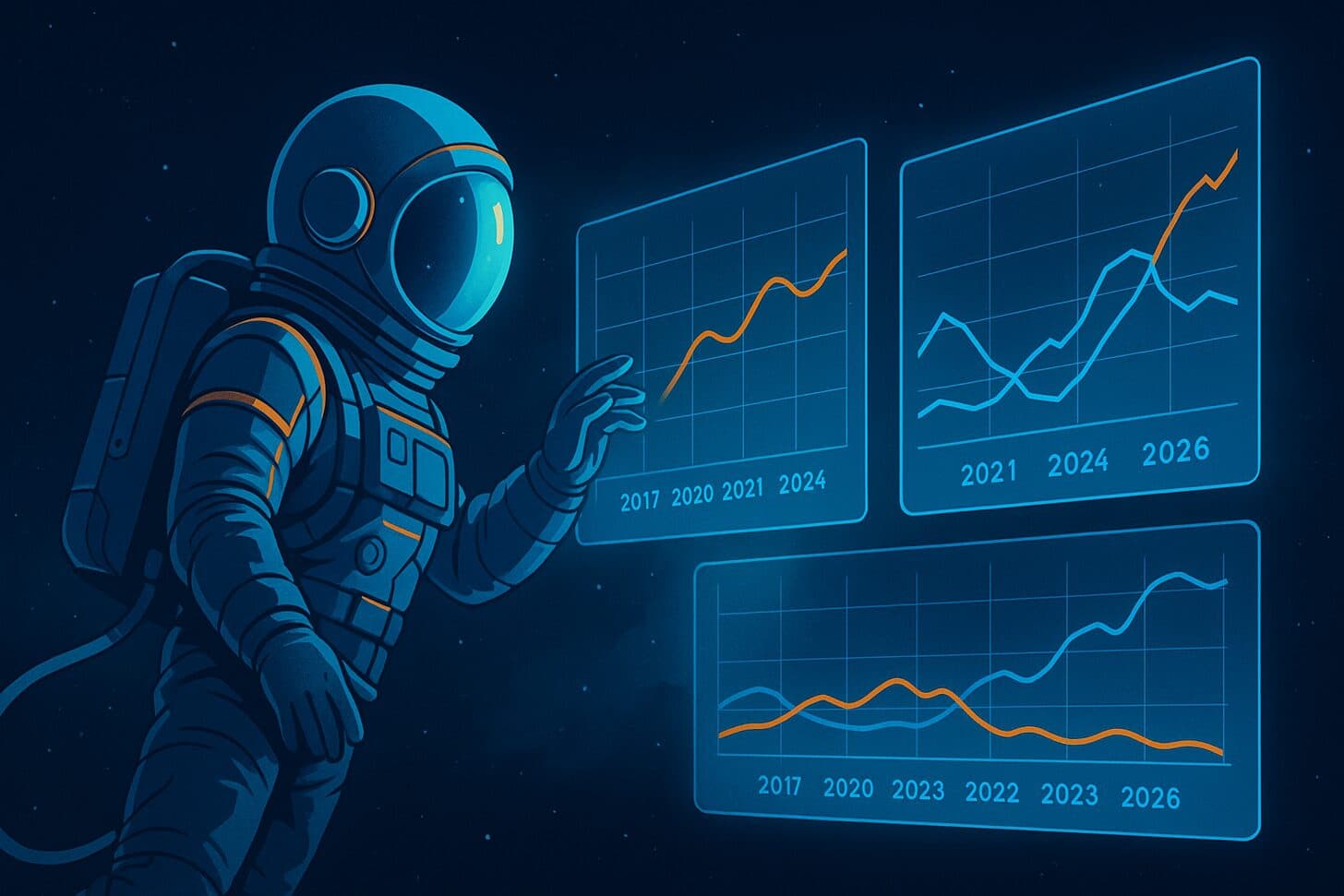
Data science as the main event. Long before "prompt engineer" was a job title, the show was calling data science "the sexy profession" and digging into how companies were gamifying big-data analysis. The framing was right: the value was moving to whoever could turn data into decisions.
Automation creeping into serious domains. Automated stock-trading algorithms, recommendation engines, the slow takeover of tasks people assumed were safe. The show treated this as inevitable rather than hypothetical. Correct.
Unsupervised learning as the interesting frontier. One episode flagged OpenAI's "unsupervised sentiment neuron", a model that learned to track sentiment in text without being told to. At the time it was a neat party trick. In hindsight it was a signpost pointing directly at the large language models that would arrive a few years later.
The misses
Scale was the whole story, and nobody knew it. The 2017 assumption was that AI progress would come from cleverer algorithms. The actual answer turned out to be, to a first approximation, more: more data, more compute, more parameters. The show can be forgiven; almost everyone missed this.
"AI will help with X" undersold "AI will do X." The era's mental model was AI as an assistant bolted onto existing tools. The reality of 2026 is that AI is often the tool. The leap from augmentation to generation just wasn't on the 2017 radar.
The pace. Even the optimists assumed a longer runway. The distance from "neat sentiment neuron" to "writes the show notes" was about eight years, not the twenty most people would have guessed.
The verdict
The show understood the direction of AI better than most tech media of its day, and badly underestimated the speed. Which, honestly, is the most human prediction error there is.
Want to hear it for yourself? The episodes where this comes up are scattered through the archive — search "data" or "neuron" and dig in. For the full report card across VR, IoT, crypto and space, see the predictions scorecard.
References
- Radford, A., Jozefowicz, R., & Sutskever, I. (2017). "Learning to Generate Reviews and Discovering Sentiment" (arXiv:1704.01444). — A network reads 82 million Amazon reviews one byte at a time and grows a single neuron that knows how you feel; everything since is arguably a footnote to this party trick.
- Davenport, T. H., & Patil, D. J. (2012, October). "Data Scientist: The Sexiest Job of the 21st Century". Harvard Business Review. — The article that gave a profession its most regrettable epithet, which the profession has spent fourteen years living down.