The makers didn't get the memo
Real artists ship. — Steve Jobs, 1983
The received wisdom of mid-2026 is that the machines have it from here. Type a sentence, get a film. Describe a feature, get a codebase. The interesting work, we're told, is now prompt-shaped.
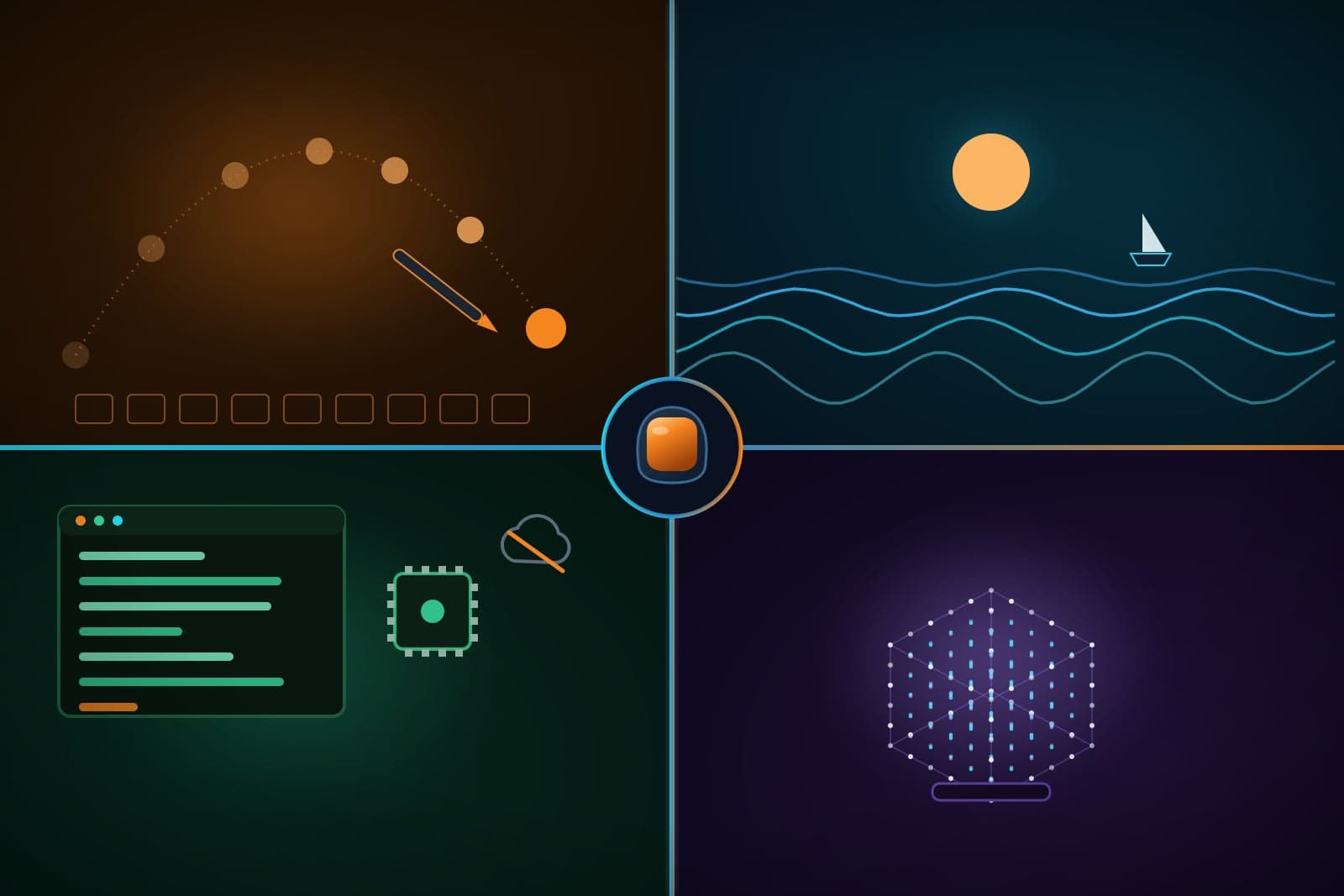
So it's worth noticing what actually filled the feeds this weekend. Not model launches. Four humans, making four things, with their hands on the controls the whole way through — and, filed under the show's four eternal beats, they line up so neatly it's almost suspicious. Tech, programming, gaming, science. One accidental episode of Space Welders, assembled by the algorithm.
Segment one — tech: a drawing app, and animators delighted
The most-shared clip in the animation corner was Savonne Draws reacting to Umoupen, a drawing-and-animation app for Windows, macOS and iPad, reportedly the long labour of a lone independent developer. The video's title — "Animators Are Losing It Over This New App" — reads like a warning until you watch it, and then you realise the losing-it is joy. Not "AI ate my job." "Someone built the tool I always wanted, and it costs less than my coffee budget."
That's the tell. The default 2026 headline about art software is dread. This one was the opposite: a human made a thing that helps other humans make things. The show always had more time for the person in the garage than the press release, and here the garage won the week.
Segment two — programming: someone finally said it about local models
For the code segment, Theo posted "I need to rant about local models", and the rant is the useful kind. His argument, roughly: there's a canyon between a model that technically runs on your hardware and one that's actually fast, cheap and good enough to beat just calling the cloud. Once you price in the GPU, the electricity and the tokens-per-second, the run-it-yourself dream gets a lot less magical.
You can disagree with him — plenty did — but the posture is pure Space Welders. The show's best instinct was never hype and never doom; it was the raised eyebrow. IoT was going to chip every toaster; the hosts called the bubble. "A bot for everything" was going to change your life; it mostly ordered pizza. A good enthusiast loves the toy and checks the receipt. Theo checked the receipt.
Segment three — gaming: an ocean you can drop in a folder
Gaming got William Faucher and "Introducing EasyWaterscape for Unreal Engine 5" — a Tessendorf-FFT ocean simulation wrapped up as a single Blueprint you drop into a level and tune with presets: swell, chop, foam, buoyancy, a coastline maker. Real, non-repeating waves from your boots to the horizon, made approachable enough that a solo dev on a deadline can have a believable sea by lunch.
This is the maker economy the show watched being born. Faucher has been in games and VFX since 2009; now the same person who used to need a studio to fake an ocean sells the ocean to the next person, on Epic's own marketplace, for the price of an afternoon. The tools got democratic. The 2015 version of this segment would have been three minutes of gawping at a AAA trailer. The 2026 version is one artist handing every other artist the good stuff.
Segment four — science: a boy, a motor, and a hologram
And for the science-and-daft-hardware slot — the beating heart of any good tech show — matthew lim built "a mini volumetric display using linear motion". An 8×8 LED matrix on an ESP32, bounced up and down a 20 mm track by a little N20 motor with an encoder, flashing in time with its own position so persistence of vision stacks the pixels into a floating 3-D image. Rack and pinion. A 3-D-printed gear that jammed until the tolerances got fixed. A custom PCB. A hologram, basically, out of parts that cost less than a game.
No large model wrote that. No prompt produced the moment the gear finally meshed. It's someone bending physics with a motor and a stubborn refusal to buy the finished thing — which is, more or less, the entire reason the show existed.
The memo, unread
Put the four together and the pattern isn't nostalgia, it's a rebuttal. The story of 2026 is supposed to be generation: describe it, receive it, done. The videos people actually chose to watch and pass around were about making: a tool built by hand, a claim tested by hand, an ocean crafted by hand, a hologram soldered by hand.
We've written before about the tools that started using themselves, and that's real — the agents are genuinely driving the debugger now. But the flip side kept its appointment too. The more the machines can do unattended, the more it seems to matter to people that a person sat down and made something on purpose. The maker didn't get the memo that they were obsolete. Or they got it, read it, and went back to the workbench.
Mike and Steve ran that show for two years on exactly this frequency: four segments, four kinds of enthusiasm, one microphone, no press office. The lineup this weekend booked itself. Go dig through the archive and you'll hear the same signal in 2016 audio — the future is always being built by someone in a garage while everyone else argues about the memo.
References
- Savonne Draws. (2026). Animators Are Losing It Over This New App [Video]. YouTube. — The reaction that reframes the year: an artist's channel meeting Umoupen (umousoft) and finding delight where the genre trained us to expect dread.
- Theo (t3.gg). (2026). I need to rant about local models [Video]. YouTube. — The receipt-checking segment: local inference can be technically possible and still lose to the cloud once hardware, power and tokens-per-second are on the table. See also the ecosystem argument on Hacker News.
- Faucher, W. (2026). Introducing EasyWaterscape for Unreal Engine 5 [Video]. YouTube. — A realtime Tessendorf/JONSWAP ocean as a one-drop Blueprint, sold on Fab; the maker economy the show watched being born, now selling the sea back to the next maker.
- lim, matthew. (2026). i made a mini volumetric display using linear motion [Video]. YouTube. — ESP32 + 8×8 LED matrix bounced on an N20 motor and rack-and-pinion at ~16 Hz, persistence of vision doing the rest; Hackaday has the teardown. A hologram made of stubbornness.