The tools started using themselves
Think of MCP like a USB-C port for AI applications. — Model Context Protocol documentation
Back in 2016, the show ran an episode called There's a Bot for that…. The joke wrote itself: chatbots were the new apps, every startup had one, and most of them could just about order you a pizza if you typed slowly and forgave often.
Scroll the tech feeds this week and the joke has inverted. The trending repositories aren't bots you talk to. They're agents that use your tools for you.
What's actually trending
A snapshot from this week's feeds, no cherry-picking required:
- Chrome DevTools now ships an MCP server — an official bridge that lets an AI agent open the debugger, inspect the page, and read the network tab the way you would.
- Alibaba's page-agent drives whole web pages: navigating, clicking, filling — the browsing done by the thing that used to be the destination.
- OpenAI publishing plugins for other companies' coding agents, because agent-to-agent tooling is now a category with an audience.
- Library releases bragging about MCP sampling and concurrent tool execution the way 2016 releases bragged about dark mode.
- Think-pieces proposing an "AI-DLC" — a development lifecycle where the AI isn't a step in the process, it's the process.
The common thread is a quiet standard called MCP — the Model Context Protocol. The lazy analogy is USB for AI tools, and like USB it's boring, which is exactly why it won. Every debugger, browser, wiki and search box gets a port; every agent gets a cable.
The 2016 mental model, upgraded
The bots of the show's era sat between you and the tool. You told the bot, the bot told the API, and something vaguely pizza-shaped arrived. The tool was still the tool; the bot was a chatty front door.
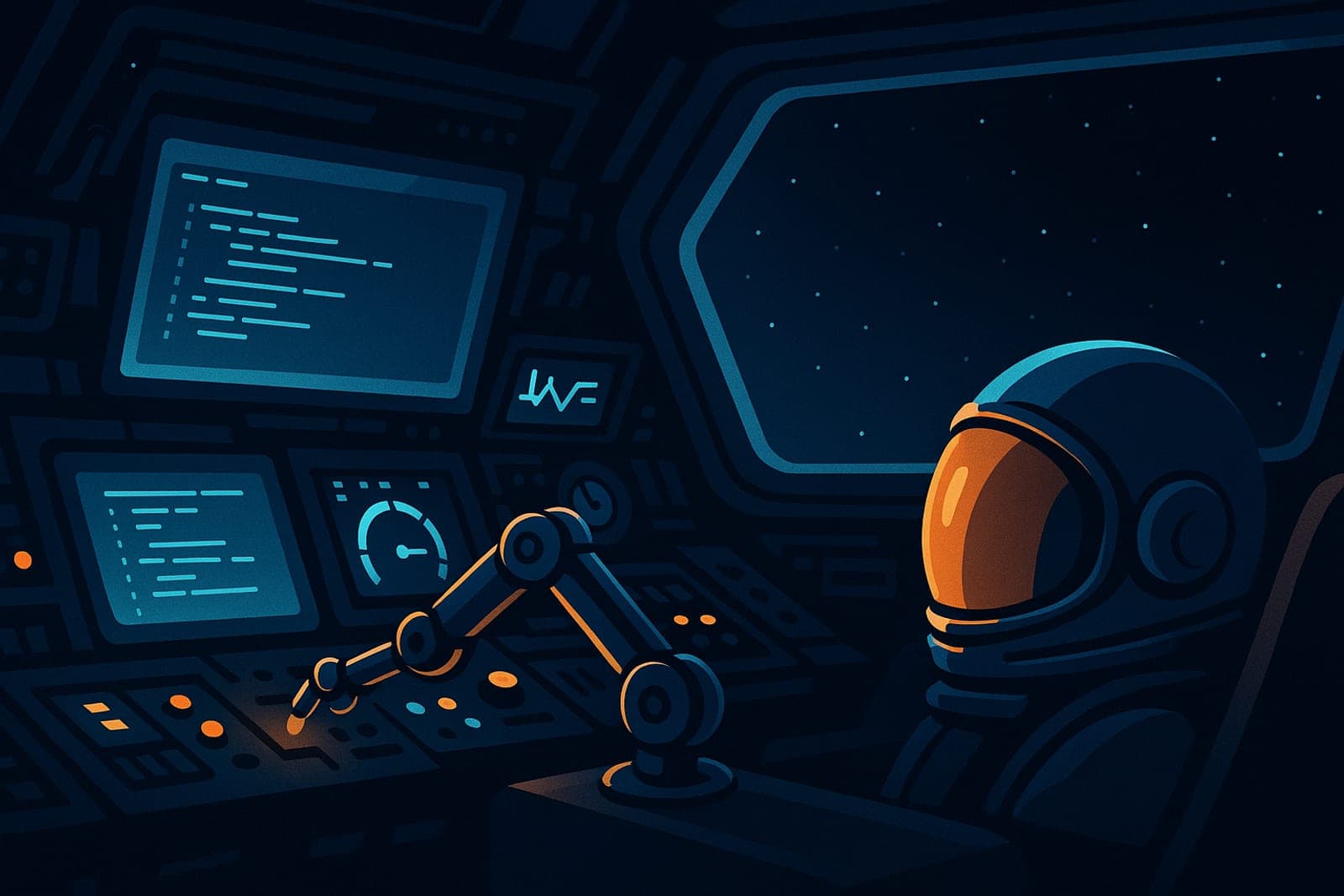
The 2026 version deletes the middle of that sentence. The agent doesn't relay your intent to the debugger — it is in the debugger, stepping through frames, reading your console errors, fixing the thing while you get coffee. The front door became the tenant.
Mike and Steve's era assumed software's future was more surfaces for humans: more apps, more screens, more dashboards. What actually happened is that the surfaces are increasingly for machines — and the measure of a good tool in 2026 is how well it can be driven with nobody looking at it.
The bit the show got right anyway
Here's the thing: under the jokes, the bot episode had the right instinct. The interesting question was never "can a bot order pizza." It was "what happens when the interface stops being the product." The 2016 answer was a shrug. The 2026 answer is: the interface becomes an API, the API grows a protocol, and the protocol quietly becomes the most important standard nobody outside the industry has heard of.
We graded the show's big predictions recently and dinged them for missing how general AI would get. Fair. But nobody in that scorecard missed this one, because nobody anywhere called it: the tools using themselves wasn't on 2016's bingo card at all.
The uncomfortable footnote
A show recovered from a dead WordPress site, transcribed by a machine, summarised by a machine, and now written about on a site that machines helped build and review. Every layer of this archive has an agent's fingerprints on it — we've noted before how the show notes themselves are a conversation between two eras of machine learning.
At some point the right question stops being "what can the agents do." It becomes "what's left that we insist on doing ourselves." The Welders would have had a good argument about that one. Probably two segments and a tangent about pizza.
The bots-for-everything era is in the archive — episode 36 is a good place to hear the future being underestimated in real time.
References
- Bynens, M., & Hablich, M. (2025, September 23). "Chrome DevTools (MCP) for your AI agent". Chrome for Developers. — Google formally hands the debugger keys to the agents: "AI coding assistants are able to debug web pages directly in Chrome."
- Alibaba. (2025). page-agent [JavaScript in-page GUI agent, MIT licence]. GitHub. — "Control web interfaces with natural language," says the repo description, meaning the browsing is now done by the thing that used to be the destination.
- Anthropic et al. (2024–present). Model Context Protocol [open standard]. — The boring little USB-C-for-AI standard (their analogy, officially) underneath everything else on this list; first released November 2024.